

A salt pool is still a chlorine pool. A salt cell at the equipment pad turns dissolved salt into chlorine whenever the pump runs, so the water stays sanitized without jugs or tablets and feels noticeably softer. CoastLife Pools converts existing pools in about a day, works with the pump and filter you already have, and services salt cells on our weekly routes.
How Salt Water Pools Actually Work
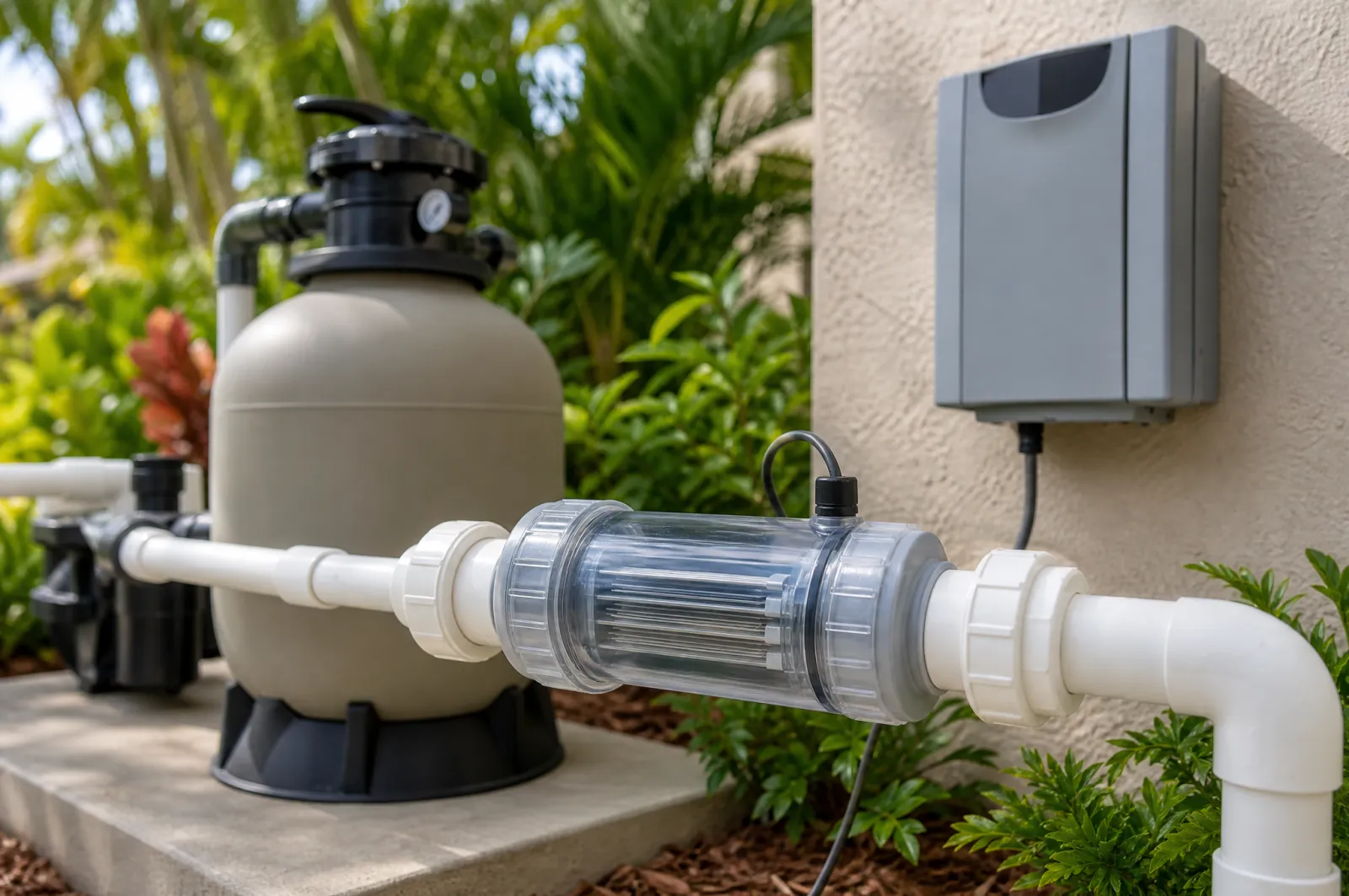
A salt chlorine generator, usually just called the cell, sits in line after your filter. As water passes through it, a low-voltage charge across titanium plates splits dissolved salt into chlorine, which sanitizes the pool exactly the way bottled chlorine does. Used chlorine reverts to salt, and the cycle repeats.
The water holds roughly a tenth of the ocean's salinity, below what most people can taste. Because the cell makes chlorine steadily all day instead of in weekly doses, the level stays even: fewer algae surprises, less of the sharp smell people blame on too much chlorine, and a weekly routine that gets much simpler.
Salt vs Traditional Chlorine
Salt wins on feel and running cost and asks more up front. Whether it wins for you depends on how long you keep the pool and your finish, deck and equipment.
| Salt system | Traditional chlorine | |
|---|---|---|
| How chlorine gets in | Made on site by the cell | Added by jug, tablet or granular |
| Water feel | Softer, gentler on eyes and skin | Standard |
| Chlorine level | Steady whenever the pump runs | Peaks after dosing, sags between |
| Up-front cost | Cell, control board and install | None |
| Ongoing supplies | A few bags of salt a year | Chlorine every week |
| Wear parts | Cell replaced every few years | None |
| Testing and balancing | Still required weekly | Still required weekly |
The full breakdown, including who should stay on chlorine, is in our salt vs chlorine guide.
What a Conversion Involves
- Compatibility check. we look at your heater, interior finish and deck stone first, because an old copper heat exchanger, uncured plaster or unsealed soft stone changes the advice.
- Cell and control board. the cell plumbs in after the filter and the control board mounts at the pad, working with your existing pump and filter.
- Zinc anode. a sacrificial anode goes on the equipment pad to protect the metals that matter. We include it on every conversion.
- Salt and startup. salt dissolves into the existing water, the cell is set for your pool volume, and we show you the display and settings.
- Weekly care. cell checks are built into every service plan, and cleaning and replacement are routine stops on our routes.
Who Should Stay With Chlorine
Salt is not for every pool, and we will tell you if yours is one of the exceptions:
- Brand new interior finish. fresh plaster cures for about 28 days before salt should touch it. New builds start on chlorine.
- Soft natural stone you will not seal. constant splash on unsealed soft stone is the one deck scenario where we advise against salt.
- Old mixed-metal equipment. an aging heater with a copper exchanger will not love salt. Refresh it with the conversion or wait.
- Frequent drain and refill. every full drain sends the salt down the storm drain.
Salt System Questions
Is a salt water pool chlorine free?
How salty is a salt water pool?
Can I convert my existing pool to salt?
Do I still need to test and balance the water?
Does a salt cell wear out?
Will salt damage my deck or equipment?
Can I convert right after resurfacing?
We install and service salt systems across Stuart, Palm City, Jensen Beach, Hobe Sound, Sewall's Point, Port St. Lucie, Tradition, Jupiter and Palm Beach Gardens. We also take on select projects in other counties. If you are not sure we cover your area, just ask.